

Quick answer
When to see orcas in Norway depends on herring migration: November through January is peak season, with the highest concentrations in late November and December when herring spawn in northern fjords near Tromsø. February may still yield sightings as the herring disperse, but March onward sees orcas leave Norwegian waters. Departures operate daily during season, subject to Arctic daylight constraints.
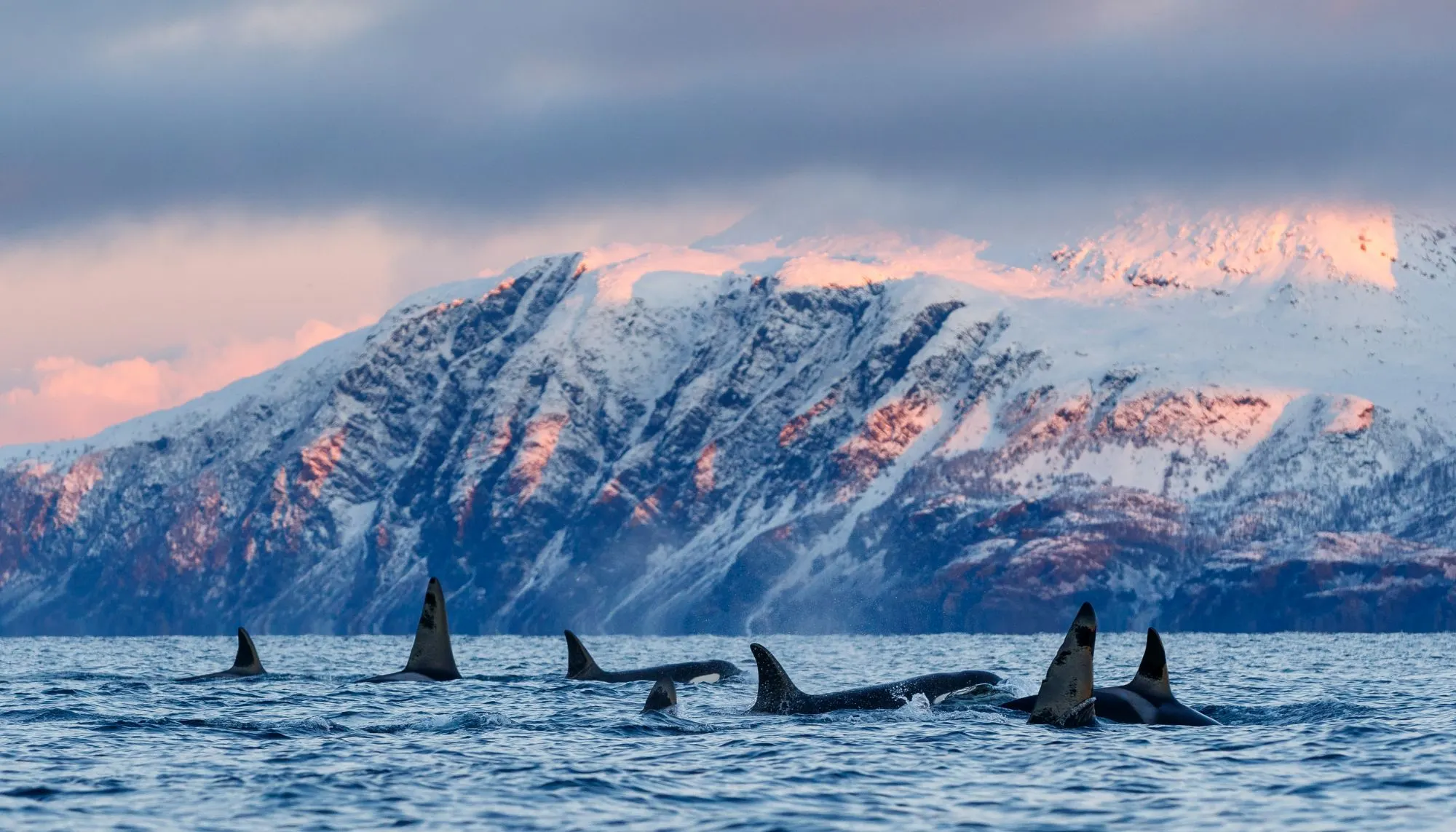
Orcas arrive in northern Norway for one reason: herring. Each autumn, Norwegian spring-spawning herring migrate into the fjords around Tromsø, Skjervøy, and the surrounding archipelago to overwinter before spawning. Killer whales follow, forming hunting groups that trap schools against the surface using coordinated tail slaps and carousel feeding. The spectacle is reliable only because the herring migration is reliable—but both are tightly bound to the calendar. The best months to see orcas in Norway are November, December, and January. Mid-November marks the start of consistent sightings as herring begin concentrating in the fjords. By late November, multiple pods are typically present, and sightings on guided departures from Tromsø reach their highest probability. December sustains peak activity, though daylight shrinks to a narrow midday window—departures leave early to maximize usable light on the water. January extends the season, but herring begin dispersing after spawning, and orca groups become less predictable. February is transitional; some operators continue into early March if conditions and sightings justify it, but most cease by mid-February. Norway's orca season coincides with polar night, when the sun does not rise above the horizon north of the Arctic Circle. Tromsø experiences nautical twilight—a blue-grey glow around midday—but no direct sunlight from late November through mid-January. Tours operate during this twilight window, departing Nerstrandakaia at 07:30 to reach feeding grounds while visibility allows. The compressed daylight limits time on the water but intensifies the experience: orcas hunt in the half-light, their dorsal fins stark against the snow-covered peaks ringing the fjord. Visitors booking for the Norwegian orca season should align travel with the November-to-January core window and prepare for sub-zero temperatures, layered cold-weather gear, and the possibility of weather-related cancellations. Sightings are never guaranteed—wild orcas move with their prey—but the herring-driven aggregation in northern Norwegian waters during these months offers the most reliable opportunity to encounter killer whales in Europe.
“Orcas arrive in northern Norway for one reason: herring.”
Daily Departure Hours When You Want to See Orcas in Norway
The daily departure schedule is fixed to ensure vessels reach feeding grounds within the limited daylight hours of the Arctic winter. Departures occur daily at the same time to maximize wildlife observation opportunities.
| Monday | 07:30–17:30 | |
|---|---|---|
| Tuesday | 07:30–17:30 | |
| Wednesday | 07:30–17:30 | |
| Thursday | 07:30–17:30 | |
| Friday | 07:30–17:30 | |
| Saturday | 07:30–17:30 | |
| Sunday | 07:30–17:30 |
Getting to the Departure Point When You Plan to See Orcas in Norway
The departure point for whale watching excursions is located at Nerstrandakaia, 9008 Tromsø. It is centrally situated along the Tromsø harbor, making it easily accessible for visitors staying in the city center.
Walking from Tromsø city center to Nerstrandakaia
Local bus lines to Prostneset terminal
Direct drop-off at Nerstrandakaia
Pricing and Admission When You Look for Where to See Orcas in Norway
There is no fixed entrance fee to access the dock area, as observing orcas in Norway relies entirely on activity-based tours. Costs are determined by the specific tour operator you choose rather than a general admission gate.
Individual visitors pay 0 NOK for general access, while the cost of whale watching activities varies based on the specific tour provider selected.
Checklist for When You Plan to See Orcas in Norway
Arctic whale watching demands preparation for sub-zero temperatures, offshore wind, and limited daylight.
-
Layer thermal base clothing — Temperatures on deck can drop well below freezing during winter sailings.
-
Bring windproof outer jacket and trousers — Offshore wind chill intensifies cold; standard winter coats are insufficient.
-
Pack waterproof gloves and warm hat — Spray from the boat and open-water conditions require full hand and head protection.
-
Wear insulated, non-slip boots — Deck surfaces become slippery; proper footwear prevents falls and keeps feet warm.
-
Charge camera batteries fully — Cold drains battery life rapidly; bring spares in an inside pocket.
-
Apply high-SPF sunscreen to exposed skin — Snow and water reflection amplify UV exposure even in winter light.
-
Arrive between 07:30–08:00 — Early departures are required to reach feeding grounds during limited daylight hours.
Common Mistakes to Avoid When You Decide When to See Orcas in Norway
Timing decisions shape the entire experience. Several planning errors recur among visitors who underestimate the constraints of Arctic winter travel.
Booking tours outside the November–January orca season
Orcas follow the herring migration, which peaks in Tromsø waters from November through January. Outside this window, sightings drop sharply. Confirm your travel dates align with this narrow season.
Arriving after 08:00 for morning departures
Tours leave early to reach feeding grounds during limited daylight hours. The best arrival window is 07:30–08:00. Late arrival means missing your departure entirely.
Underestimating how cold open water becomes in Arctic winter
Temperatures on deck routinely fall below freezing, amplified by wind chill. Layered thermal clothing and weatherproof outer shells are non-negotiable, even on shorter excursions.
Expecting long daylight spans for wildlife observation
Tromsø experiences only 4–5 hours of usable daylight in peak orca season. Tours concentrate activity within this window, so flexibility around midday departures improves your chances.
Assuming all operators run daily schedules
Weather and sea conditions frequently cancel departures. Build buffer days into your itinerary and reconfirm your booking 24 hours ahead.
Check availability
Frequently asked questions about when to see orcas in norway
Everything you need to know about when to see orcas in norway