
Quick answer
The norway whale watching season runs from early November through late January, with peak sightings typically between mid-November and early January. This window aligns with the arrival of overwintering herring in the Tromsø fjords and Skjervøy region, which attracts hunting orcas and feeding humpback whales. Outside these months, whale presence drops dramatically as herring schools disperse and cetaceans follow their prey to deeper offshore waters.
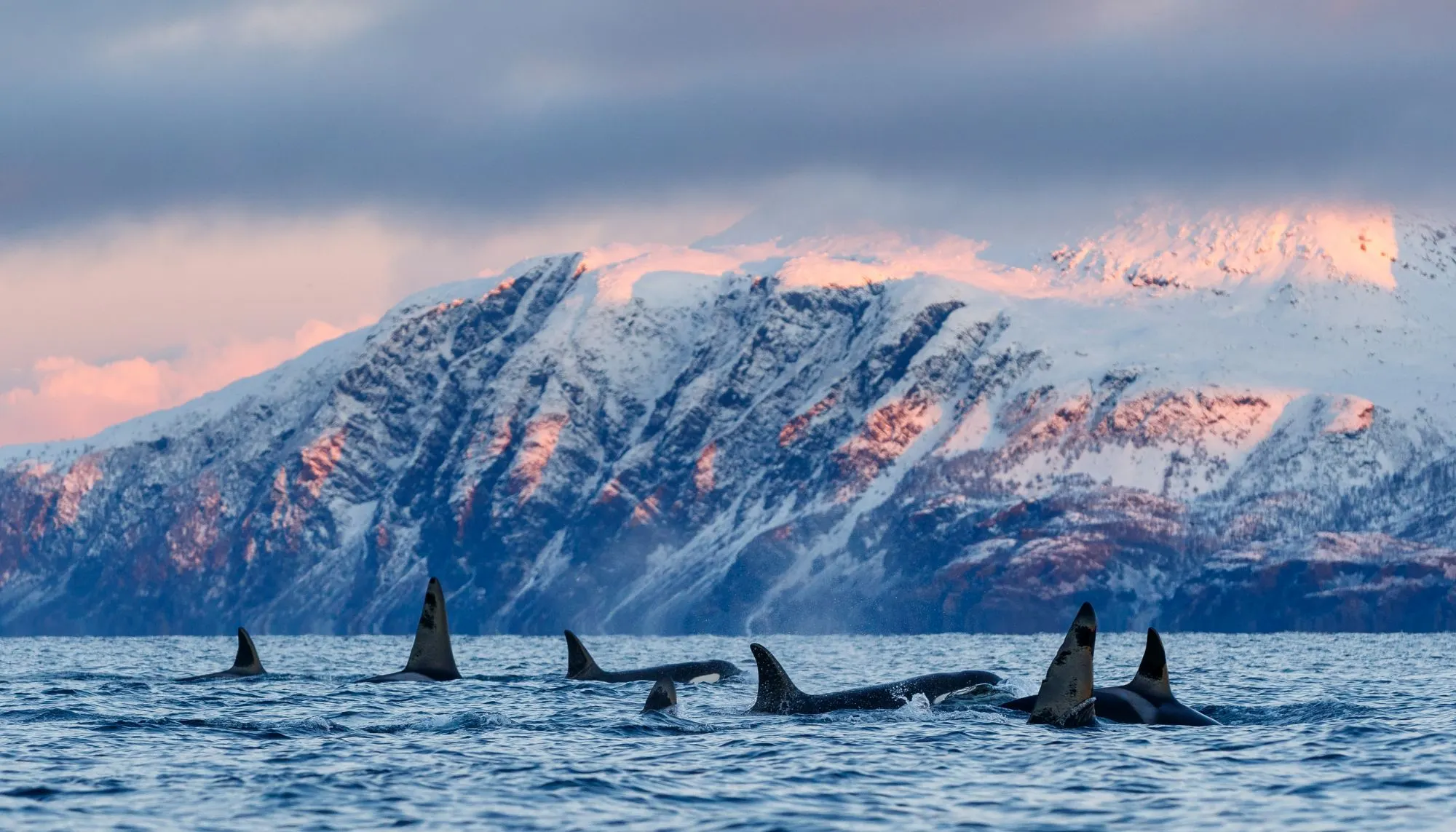
Herring dictate everything. Each autumn, millions of Norwegian spring-spawning herring migrate into the sheltered fjords of Troms county to overwinter, and their arrival triggers a predator convergence unmatched anywhere else in Nordic waters. Orcas, traveling in matrilineal pods, follow the herring schools with near-perfect timing, typically appearing in coastal waters during the first week of November. Humpback whales arrive days or weeks later, their staggered migration reflecting longer travel distances from southern feeding grounds. The norway whale watching season operates within the constraints of the polar night, the period when the sun never rises above the horizon north of the Arctic Circle. From late November through mid-January, Tromsø experiences continuous twilight, with a brief window of blue-hour illumination around midday. Boat operators schedule departures between 08:00 and 14:00 to maximize usable daylight, though photographers often prefer the low-angle light that persists even at solar noon. Surface activity remains visible in these conditions—orcas breaching, humpbacks lunge-feeding, the white flash of a fluke against dark water—but underwater visibility drops to near zero. Whale movements vary year to year based on herring distribution, which responds to water temperature, salinity gradients, and prey availability. In seasons when herring concentrate in Balsfjord or Ullsfjord, departure points shift accordingly, and tour operators adjust routes daily based on spotter reports and sonar readings. The most reliable observation zones lie within 20 to 40 kilometers of Tromsø's harbor, though exceptional years see pods feeding within sight of the city's bridge. Shore-based viewing from Tromsø Fjords and Skjervøy remains free, though distances limit what can be seen without optics. By February, herring begin their offshore migration toward spawning grounds along the continental shelf, and whale numbers decline sharply. A few individual orcas linger into March, but the dense aggregations that define the Norway whale watching season guide dissolve as pods disperse across the Norwegian Sea. Water temperature and prey tracking suggest the next decade may see herring shifting their overwintering grounds northward or westward, a pattern already evident in some research data, though the core season structure has remained stable since systematic monitoring began in the 1980s. Visitors planning trips around cetacean observation should book flexible itineraries, as weather in the Arctic closes fjords without warning and whale presence cannot be guaranteed on any single departure.
“Herring dictate everything—millions of overwintering fish draw orcas and humpbacks into Tromsø's fjords with near-perfect seasonal timing.”
Costs and Fees for Norway Whale Watching Season Excursions
Costs for whale watching in Norway depend on whether you are viewing from the shore or joining a commercial vessel. Shore viewing is free, while boat excursions are managed exclusively by private operators.
There is no entrance fee for shore viewing, while boat tour prices vary significantly depending on the private operator and package inclusions.
Planning Your Arrival for the Norway Whale Watching Season
Whale watching excursions depart primarily from the Tromsø and Skjervøy areas in Northern Norway. Travelers typically fly into Tromsø Airport (TOS) before utilizing local regional transport or private tour operators to reach departure points.
Flight to Tromsø Airport (TOS)
Bus 40 or 42 from Tromsø City Centre to Airport
Route 863 to Skjervøy
Regional ferry connections to Skjervøy
Preparation Checklist for Your Norway Whale Watching Season Trip
Norway's winter whale watching demands advance planning and polar-grade preparation.
-
Book your boat tour early
-
Peak season (November–January) tours fill weeks ahead, especially from Tromsø operators.
-
Pack thermal layers and waterproofs
-
Open-deck viewing exposes you to Arctic winds and spray, even on calm days.
-
Charge cameras and bring extra batteries
-
Cold drains lithium cells fast; keep spares warm inside your jacket.
-
Take motion-sickness tablets if prone
-
Fjord waters stay calmer than open ocean, but swells still affect sensitive passengers.
-
Arrive in Tromsø by 08:00–14:00
-
Daylight is limited during polar night; most tours depart mid-morning to maximize light.
-
Confirm departure 24 hours before
-
Weather can force cancellations; operators contact guests via phone or email listed at booking.
Check availability
Common questions regarding the Norway whale watching season
Everything you need to know about norway whale watching season